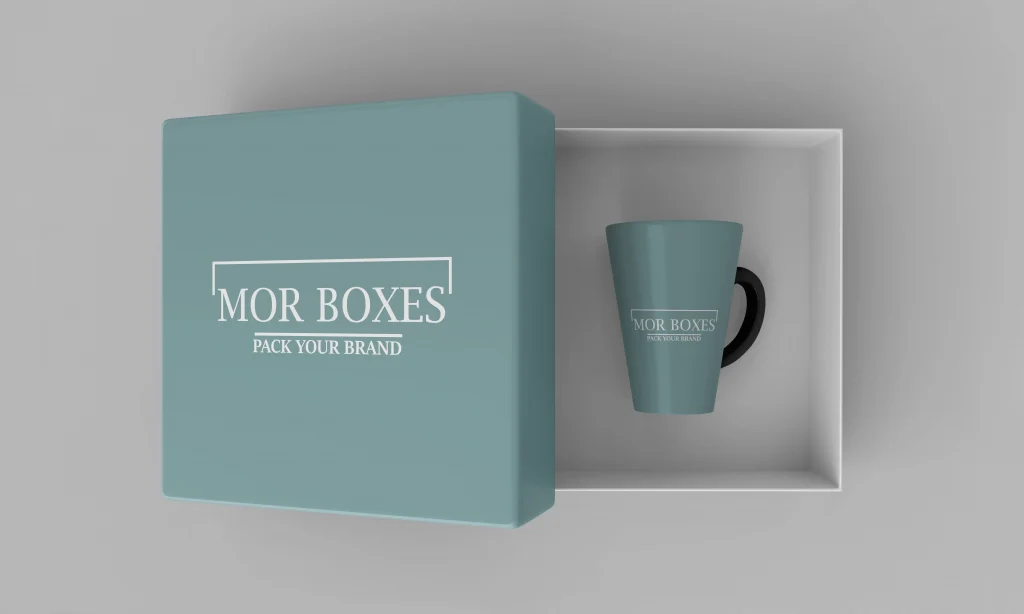

WHAT IS A RIGID BOX?
A thin material is used to wrap solid board to create luxury packaging.
Rigid boxes, also known as paper over board packaging, are high-quality, hand-crafted containers made by covering the solid board with a thin material such as paper or fabric. These boxes are extremely durable and provide a luxurious feel, making them popular for high-end products.
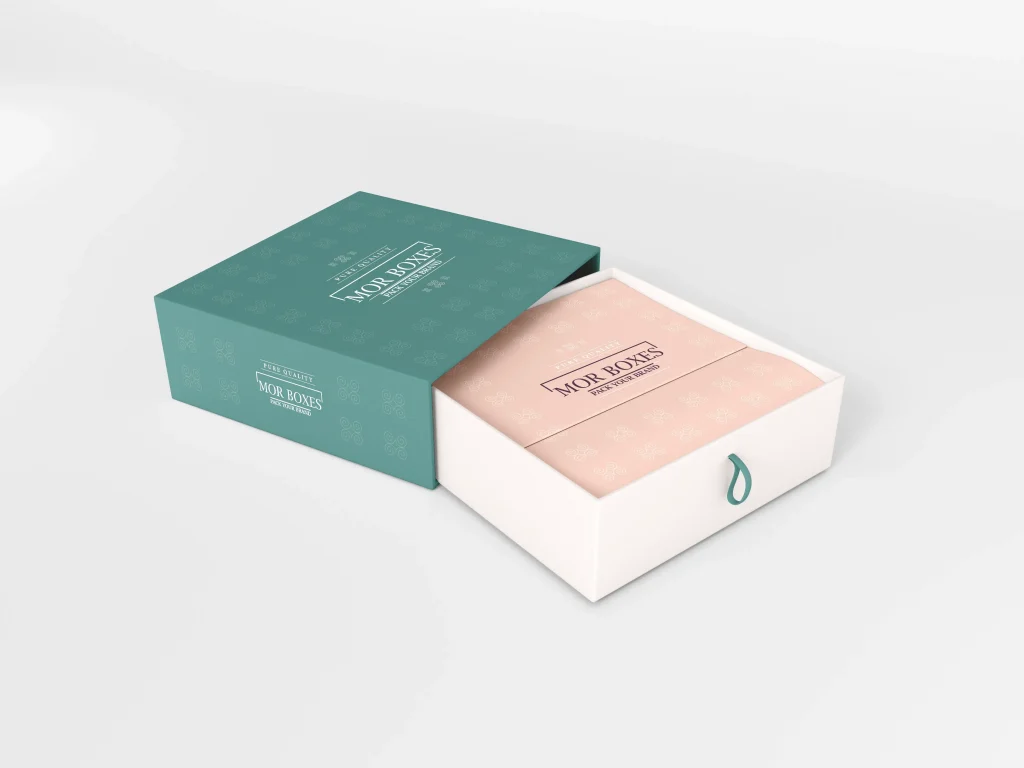
Strength & Thickness
Rigid boxes are made of thick, sturdy board, typically ranging from 36 to 120 pt, which is overlaid with printed or treated paper or fabric. This makes them much stronger and thicker than standard cardboard boxes, and they are often used to package luxury or delicate items because of their strength and protection. These boxes do not fold flat and come in a range of striking structural designs, making them a popular choice for packaging materials. The box provides strong protection and there are many options for treatments and prints on the surface.
Looks & Structure
Rigid boxes are visually and structurally impressive, conveying a sense of prestige, luxury, elegance, and quality. They are well-suited for smaller, high-end items and are often kept by customers long after the product has been purchased and used, providing a good branding opportunity. Their appearance and rigidity contribute to this.
Assembly & Shipping
Unlike folding cartons, which need to be assembled before being filled with a product, rigid boxes usually stay upright and have lower assembly costs. They are also a good option for shorter runs of at least 5,000 units because their tooling costs are lower than those required for folding cartons. Rigid boxes often have removable lids or embedded magnets, making them easier to open and reseal than folding cartons.
Types of Rigid Packaging
The two different rigid box types include partial finish and full finish rigid boxes.
Partial Finish
Partial finish rigid packaging is a type of box that is only partially completed. The wrapping is used to finish the outer surfaces of the box, while the chipboard inside is left unfinished and visible. These boxes are made with a single piece of chipboard that has perforated crease lines for folding and is wrapped without an additional exterior layer, leaving the kraft or grey chipboard material exposed. They are quicker to produce because they require less material in their construction.
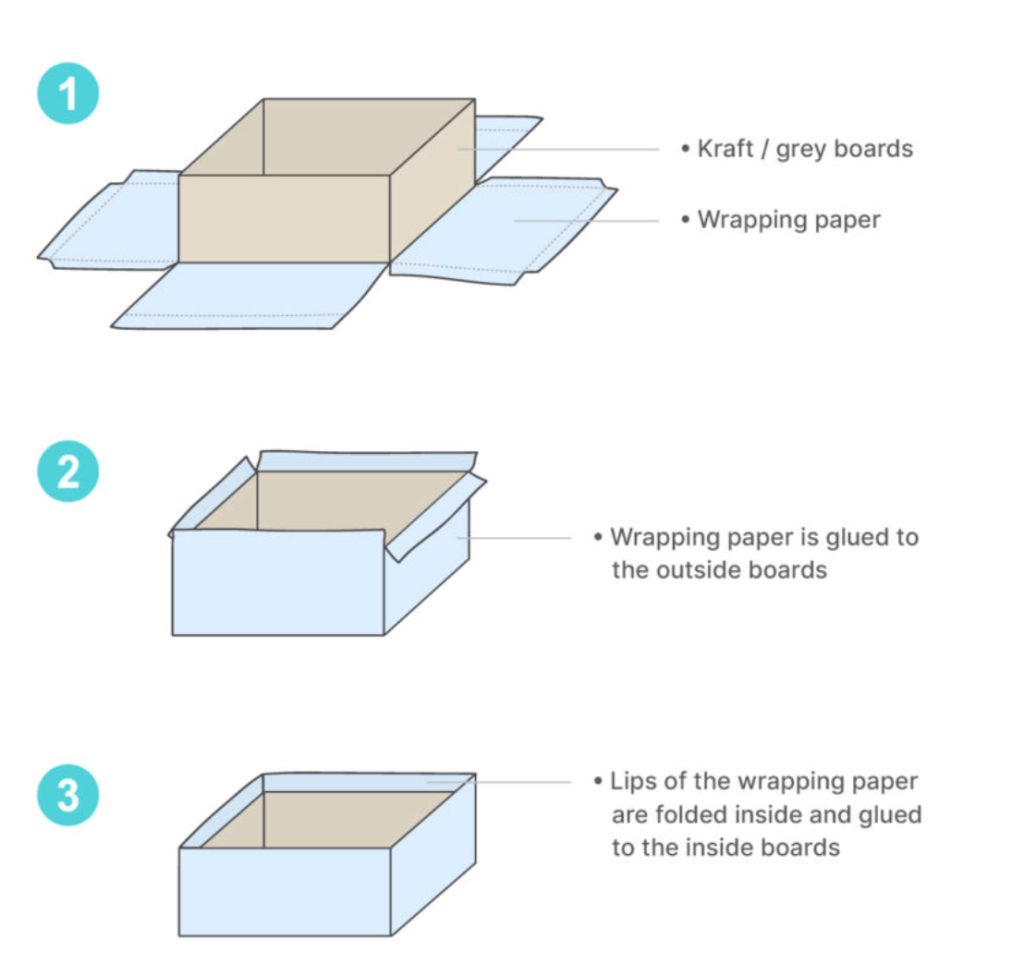
To summarize:
- The wrapping is used to finish only the inner edges of the boxes.
- The chipboard inside is unfinished and visible.
- The chipboard is made in one piece with perforated crease lines and is folded.
- Tape may be used to secure the chipboard before wrapping.
- The chipboard finish can be coated with white or Kraft on one side.
Partial Finish
A full-finish rigid box is a type of packaging that is completely covered, with no exposed chipboard. This type of box uses thicker chipboard, typically 2-3 mm in thickness, and the inner chipboard is divided into pieces for each side of the box. The inner chipboard can be laminated with different finishes to meet specific requirements. In addition, full-finish rigid boxes have an additional layer of wrapping, which can be either white or printed.
To summarize;
- The box is wrapped entirely, with no chipboard exposed
- The chipboard is made up of separate pieces for each face of the box
- No tape is used before wrapping the box
- The chipboard is thick, with a thickness of 2-3 mm
- The box is laminated with different finishing options available
It’s important to ensure that the box is made from high-quality materials and is properly constructed in order to provide adequate protection for the contents. The use of thick chipboard and a laminated finish can help to improve the durability and overall quality of the box.